
Living With a High Emotional Threshold: Why Subtle Intensity Isn’t Enough
Living with a high emotional threshold expands your window of tolerance. Learn how emotional intensity and regulation shape your threshold for sustained depth.
If subtle tension leaves you unmoved, your system may be wired for gravity, not sparks.
The room is quiet when you enter.
Not silent. Just… unprovocative.
Voices move. Light spills across the floor. Someone laughs from across the space. You register all of it — the tone, the posture, the shift in air — but nothing inside you responds yet. No quickened breath. No heat rising under your skin. Just awareness.
Living with a high emotional threshold means mild intensity rarely crosses into activation. Your emotional threshold doesn’t flare at suggestion. It waits for something that can hold its shape. Your nervous system regulation requires a sustained signal before an emotional response even begins to build.
From the outside, that steadiness can look like detachment.
Inside, it feels like patience.
You are not unmoved.
You are untriggered — until something proves it can stay.
There is a difference.
And when you live with a high emotional threshold, that difference defines everything about how intimacy unfolds.
To understand how your emotional threshold shapes depth, activation, and intensity.
What a High Emotional Threshold Actually Feels Like
Someone steps closer.
Close enough that you can feel the temperature shift between you.
Still — nothing spikes.
A hand brushes your arm in passing. The contact is light. Brief. Suggestive, maybe. For many people, that’s enough to spark something immediate. For you, it barely registers. The stimulus touches your skin but doesn’t travel far.
This is what a high threshold nervous system feels like from the inside.
Your emotional response does not ignite at subtle sensory intensity. It waits for sustained intensity — for pressure that doesn’t vanish the moment it appears.
It isn’t that you don’t notice.
You notice everything.
The shift in breathing. The slight hesitation before someone speaks. The way their eyes linger half a second longer than neutral. You catalog it. You measure it. But the heat doesn’t rise just because the cue exists.
It rises when the cue remains.
When proximity holds.
When the moment doesn’t collapse into awkwardness or retreat.
Living with a high emotional threshold means activation is cumulative. A single stimulus rarely moves you. A layered, sustained exchange does.
That can feel confusing in a culture that equates immediacy with desire.
You may have wondered:
Why don’t I react faster?
Why does subtle flirtation feel almost… distant?
Why does everyone else seem to ignite before I do?
Because your system isn’t built for sparks.
It’s built for weight.
When intensity stays — when silence stretches instead of breaking, when closeness lingers instead of flickering — something shifts slowly in your chest. Not a jolt. Not a spike.
A gathering.
That gathering is your threshold being crossed.
And once it’s crossed, it doesn’t disappear easily.
If the spark hits fast, your threshold ignites early, you may have a...
Why Subtle Sensation Fades Quickly
A glance alone won’t do it.
A soft word, a fleeting touch, a suggestive pause — you register them, but they dissolve before they reach depth. The moment flickers. Your body remains steady.
For someone living with a high emotional threshold, weak sensory input rarely sustains long enough to cross activation. Your nervous system regulation favors clarity over novelty. The stimulus must remain present — consistent — before your emotional response begins to organize around it.
This is where the window of tolerance matters.
People often assume high intensity seekers live in hyperarousal — always chasing stronger stimulation — or drift toward hypoarousal, feeling numb unless something extreme happens. But high emotional thresholds don’t necessarily sit in either state. They live in delayed activation.
Inside your window of tolerance, subtle sensation may not register as meaningful at all. It isn’t that you are cold. It’s that your system requires sustained signal before it categorizes something as significant.
Dopamine regulation works differently here.
Brief novelty spikes and fades. Escalation without depth leads to nothing but emptiness afterward. What moves you is not randomness — it is persistence.
When proximity stays.
When silence holds.
When the space between you and someone doesn’t collapse under its own tension.
That’s when your threshold begins to shift.
You may have mistaken this pattern for indifference in the past. Others may have labeled you hard to impress. But the truth is simpler and heavier than that.
You don’t respond to sparks.
You respond to gravity.
And gravity takes time to build.
If you lean in and pull back, your tension runs unstable, you may have a ...
Depth Before Activation
You don’t rush toward intensity.
You let it approach you.
Someone moves closer. Not abruptly. Deliberately. Their presence stays within your space longer than necessary. The air changes — not dramatically, but enough that you feel the shift along your spine.
You don’t react.
You absorb.
Living with a high emotional threshold means your capacity for intensity is high — but activation depends on depth, not speed. Controlled intensity builds differently than escalation. It accumulates.
A single stimulus rarely crosses the line.
But layered stimulus and response does.
The warmth doesn’t flare. It settles slowly beneath your skin. Your breathing adjusts before you consciously notice it. Your emotional awareness sharpens. You begin to track not just what is happening — but whether it will continue.
That is the difference.
Escalation chases more.
Depth sustains what already exists.
For high-threshold systems, activation isn’t about increasing volume. It’s about increasing weight. The capacity for intensity grows when the moment remains steady instead of breaking apart.
A hand resting at your waist — not moving.
A gaze that doesn’t dart away.
Silence that stretches without apology.
This is where something shifts.
Not explosively.
Heavily.
Your system begins to lean forward internally. Not because the intensity is extreme, but because it proves it can hold. Emotional response forms slowly, like pressure gathering under the surface of still water.
You are not overwhelmed.
You are not hyperaroused.
You are inside your window of tolerance — and something is finally substantial enough to matter.
When that threshold moves, it does not flicker.
It deepens.
And once it deepens, it is far harder to reverse than a spark ever was.
Sensory Interfaces for Sustained Intensity
For high-threshold systems, sensory interfaces are precision tools designed to deliver sustained, high-resolution input without distortion.
You are not seeking chaos.
You are seeking signal.
When intensity fluctuates unpredictably, your system stays neutral. Random escalation does nothing. What activates you is continuity — pressure that doesn’t disappear, rhythm that holds steady long enough for your emotional threshold to recognize it as meaningful.
This isn’t about needing more.
It’s about needing clarity.
High-threshold systems respond best to controlled intensity — not explosive, not frantic. Sustained depth keeps you inside your window of tolerance without tipping into hyperarousal or dullness.
Nothing rushed.
Nothing scattered.
Just weight that remains.
That is what precision feels like when intensity finally lands.
To understand how your emotional threshold shapes depth, activation, and intensity.
When Gravity Replaces Spark
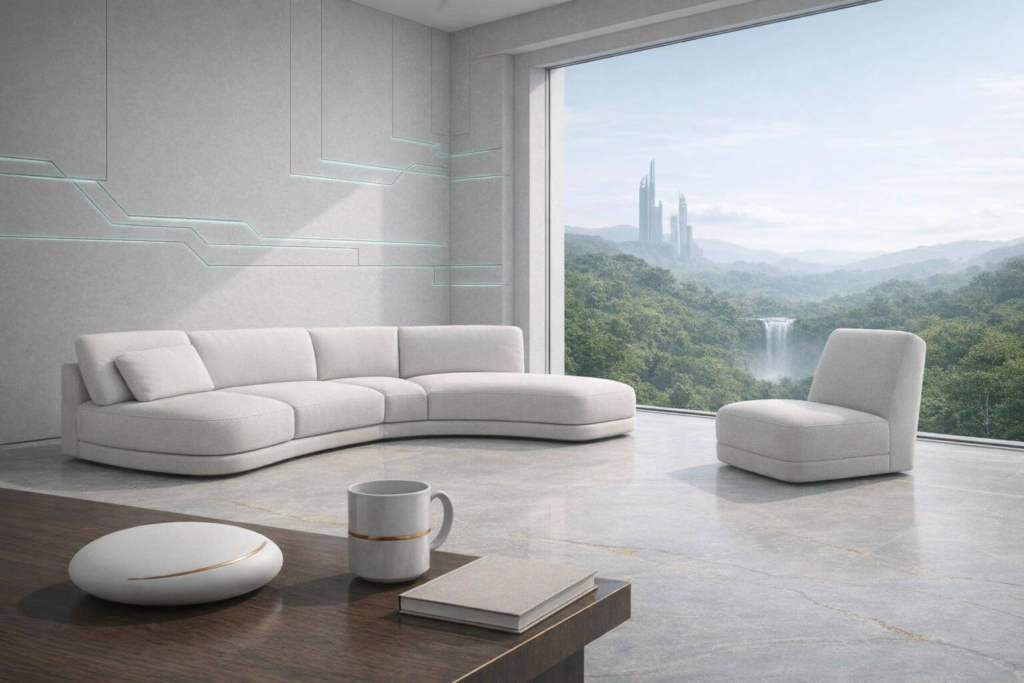
The room is open.
Daylight spills across stone and copper. The air is still. Nothing flickers for attention. Nothing competes for reaction.
You stand there.
Unmoved — until something proves it can stay.
Living with a high emotional threshold means your nervous system does not chase intensity. It absorbs it. The emotional response builds only when the presence holds long enough to matter.
A glance that lingers.
A hand that doesn’t retreat.
A silence that stretches instead of breaking.
You feel it slowly — not as a spike, but as weight gathering beneath the surface. Intensity settles instead of flaring. It moves deeper rather than louder.
This is not hyperarousal.
It is compression.
Inside your window of tolerance, depth replaces novelty. The stimulus doesn’t overwhelm. It anchors. The experience becomes immersive because it sustains — not because it escalates.
You don’t ignite quickly.
You descend.
And when something finally reaches you, it doesn’t burn bright and disappear.
It stays.
That is the difference between spark and gravity.
And when gravity settles into your emotional threshold, it is not easily shaken loose.
Soul Disclaimer:
Your emotional threshold is not excess.
Awareness comes before regulation.
Understanding how your system responds to sustained intensity gives you choice — not pressure.
If you recognize living with a high emotional threshold in yourself, take the Decoding Your Intimacy Circuitry quiz to understand how your emotional threshold shapes depth, activation, and intensity.