
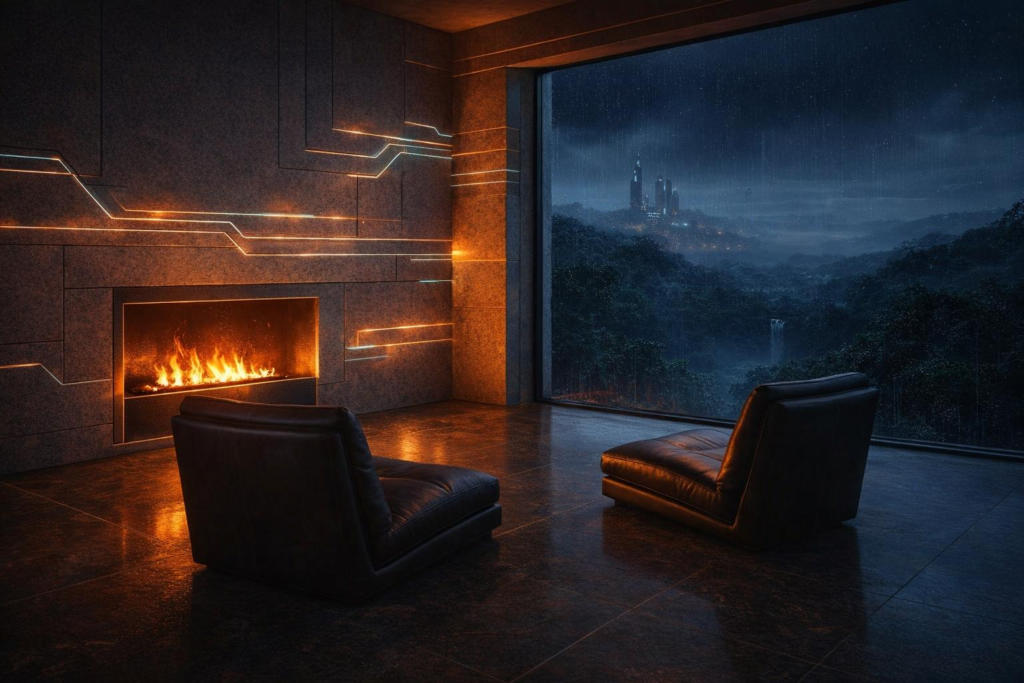
When a low emotional threshold causes closeness to heighten before you’re ready.
Why Sensation Feels Like Too Much: Living With a Low Emotional Threshold
When closeness accelerates before you’ve decided whether you want it to — and your system reacts before your mind can explain why.
When a Look Is Enough
You notice it immediately.
A look that lingers just long enough to feel intentional.
Not accidental. Not friendly. Intentional.
You hold it for a second longer than you meant to.
They step closer.
Not touching.
But close enough that you become aware of your own body — how it’s positioned, how it’s angled, how little space is actually between you now. The air shifts. You can feel the warmth before there’s contact.
Your breath changes.
You don’t mean for it to. It just does.
You feel a pull low in your awareness — not overwhelming, not uncontrollable — but undeniable. A current running just beneath your composure. Your focus narrows. You’re suddenly hyper-aware of the distance between you and what would happen if that distance disappeared.
Nothing explicit is happening.
But your body is no longer neutral.
Living with a low emotional threshold means intensity doesn’t warm gradually. It sparks. A glance. A shift in tone. A subtle lean forward. And your system reacts before you’ve sorted out whether this is safe, welcome, or too fast.
For some people, desire builds like a slow tide.
For you, it can strike like a match.
The charge arrives almost complete.
And here’s where it turns.
You feel the heat — and at the same time, a tightening. A quiet brace under your ribs. Not fear. Not rejection. Just awareness that this is escalating before you’ve grounded yourself inside it.
You want it.
But you want to want it at your pace.
That internal tension — wanting and steadying at the same time — is the experience of a low emotional threshold.
You don’t miss subtlety.
You absorb it.
And when intensity rises quickly, your body can respond before your mind gives permission. Your pulse picks up. Your attention locks in. You’re calculating without looking like you’re calculating.
Can I stay here?
Can I let this move further?
Will I still feel steady if it does?
Sometimes you shift your weight back.
Sometimes you create just enough distance to breathe again.
Not because you’re uninterested.
Because you felt everything all at once.
That sensitivity is powerful.
But without pacing, it can feel like standing too close to a flame — drawn in and slightly overwhelmed at the same time.
There is nothing wrong with your desire.
The discomfort lives in how fast it ignites.
And when no one names that ignition, you can start to believe you’re either too much — or not enough — when in reality, you simply register intensity before most people do.
If you lean in and pull back, your tension runs unstable, you may have a...
Where Emotional Threshold Meets Intimate Tension
You’re still standing there.
They haven’t moved closer again — but they haven’t stepped back either.
The space between you feels deliberate now.
When someone’s voice lowers, even slightly, you don’t just hear the shift. You feel it travel through you. When they lean in to say something that could’ve been said from a distance, your body registers that decision before your thoughts do.
You’re aware of your posture.
Of how close your hand is to theirs.
Of how easily this could tip into something more.
This is intimate tension.
And for you, it doesn’t simmer.
It spikes.
Your emotional threshold sits close to the surface, so anticipation doesn’t build slowly. It rises fast. The almost feels immediate. The possibility feels present, not hypothetical.
You don’t experience “maybe someday.”
You experience “right now.”
That doesn’t mean you’re reckless.
It means your system reacts quickly to potential closeness.
You feel the warmth — and the vulnerability — at the same time.
Part of you wants to lean forward.
Part of you wants to slow it down.
That dual pull is the real tension.
When someone else might still be deciding whether they’re interested, you’re already managing the intensity of being interested.
You feel attraction fully.
You feel risk fully.
You feel the shift in power, pace, and possibility in real time.
And if the moment moves too quickly without steadiness, your body will choose distance before your mind finishes the debate.
Not because you lack desire.
Because your desire ignites early.
When you understand that ignition pattern, you stop judging yourself for reacting strongly to subtle cues.
You begin to realize:
The heat wasn’t the problem.
The pacing was.
And once pacing becomes intentional — once you breathe before stepping back, once you let yourself stay inside the warmth for one extra second — intimacy stops feeling like something that overruns you.
It becomes something you can hold.
If desire builds slow, depth is your ignition, you may have a...
What Living With a Low Emotional Threshold Actually Feels Like
You notice small shifts before most people do.
A pause that stretches a little longer.
A look that holds just enough to feel charged.
A subtle change in tone that tells you the conversation isn’t neutral anymore.
Where someone else might shrug it off, your body doesn’t.
You register it.
In intimate moments, that sensitivity can feel powerful. You’re rarely confused about whether something has changed. You feel when attraction enters the room. You feel when distance grows. You feel when someone’s energy turns deliberate instead of casual.
But that same quick awareness can make closeness feel intense faster than expected.
You may feel your pulse respond before there’s contact.
You may sense tension before words acknowledge it.
You may experience anticipation fully while the other person is still easing into it.
And when intensity rises quickly, your body prepares.
Not dramatically.
Subtly.
Your shoulders tighten.
Your breath shortens.
Your focus sharpens.
It’s not panic.
It’s readiness.
A low emotional threshold means stimulation crosses into awareness early. You don’t warm slowly — you ignite quickly. That ignition can be exciting. It can also feel like standing near something powerful without knowing how long you can comfortably stay there.
This is where misunderstandings happen.
From the outside, someone might see you pull back and assume you lost interest. But internally, you were already managing the intensity of interest.
You didn’t withdraw because you felt nothing.
You stepped back because you felt everything at once.
Living this way can create a quiet pattern:
• Strong attraction
• Rapid activation
• Sudden self-containment
It’s not instability.
It’s speed without pacing.
When no one explains that to you, you may start to question your reactions. You may wonder if you escalate too fast or retreat too quickly.
But once you understand your threshold, something steadies.
You begin to anticipate your own ignition.
You begin to breathe earlier.
You begin to stay present one beat longer before creating distance.
And that single extra beat can change how intimacy unfolds.
Because the goal isn’t to reduce your sensitivity.
It’s to match it with steadiness.
Sensory Interfaces That Support Early Ignition
When your threshold ignites quickly, control becomes grounding.
Not control over desire —
control over pace.
For fast-activating systems, sensory interfaces are not about intensity. They’re about adjustability. The ability to increase stimulation slowly. To pause without killing the moment. To shift rhythm without losing connection.
If closeness rises fast for you, tools that allow shared pacing can prevent overwhelm. Adjustable feedback. Gradual escalation. A way to stay inside the heat without feeling consumed by it.
The difference isn’t more sensation.
It’s managed acceleration.
When intensity can be dialed instead of endured, your body relaxes sooner. You don’t brace as quickly. You don’t retreat automatically.
The spark still arrives.
It just doesn’t outrun you.
Not sure which threshold fits you yet? Take the Intimacy Circuitry quiz and learn your pacing pattern.
Conductive Warmth: When Intensity Flows Instead of Spikes
The problem was never the heat.
It was how fast it arrived.
When intensity spikes without grounding, your body reacts like it needs to contain something. That’s when you brace. That’s when you create distance. That’s when closeness starts to feel like something you have to manage.
But intensity doesn’t have to disappear.
It has to flow.
Think about the difference between standing too close to a flame — and sitting near steady warmth.
One overwhelms.
The other draws you in.
If your emotional threshold is low, your system needs pacing before it can relax into closeness. That means learning to regulate earlier — not after the moment has already escalated.
You feel the shift in tone?
Breathe there.
You feel your pulse pick up?
Stay there one second longer before adjusting.
You notice the space between you shrinking?
Ground yourself instead of retreating automatically.
Regulation isn’t suppression.
It’s steadiness inside stimulation.
When you learn to slow your own internal acceleration, something changes.
The warmth doesn’t disappear.
It deepens.
Instead of bracing under the charge, you start to feel capable of holding it. Your breath steadies. Your body stops calculating escape routes. You realize you can remain inside the moment without losing control.
That’s when intimate tension becomes powerful instead of overwhelming.
Not because it’s weaker.
Because you are steadier.
Low emotional threshold doesn’t mean you’re destined to oscillate between intensity and withdrawal. It means your ignition system is strong. When matched with pacing, that ignition becomes magnetic instead of chaotic.
You don’t need less desire.
You need rhythm beneath it.
And rhythm turns spikes into flow.
Soul Disclaimer
Understanding your emotional threshold is more important than trying to change it.
You are not too reactive.
You are not too intense.
You are not immature.
You simply register closeness early.
Awareness comes first.
Steadiness follows.
If you’re unsure where your emotional threshold sits — whether you ignite quickly, build slowly, or oscillate between both — the Decoding Your Intimacy Circuitry quiz can help clarify your sensitivity pattern and regulation style.
Sometimes clarity is what allows desire to feel safe enough to stay.