
Technology and Intimacy — Understanding the Real Impact on Your Relationship
Digital distraction in love doesn’t feel dramatic — it feels subtle. Small shifts in attention can slowly reshape closeness and connection.
TL;DR
- Technology doesn’t just distract — it restructures how intimacy, desire, and emotional presence form between partners.
- Digital environments redirect attention, creating moments where lovers lie side by side yet feel emotionally distant.
- The algorithmic gaze teaches the mind to seek stimulation, novelty, and comparison outside the relationship.
- High-speed screen habits blunt sensitivity to subtle cues like tone, breath, and embodied presence.
- Rebuilding closeness requires intentional awareness — not abandoning tech, but changing how it shapes perception.
How screens reshape desire, attention, and emotional presence in modern love.
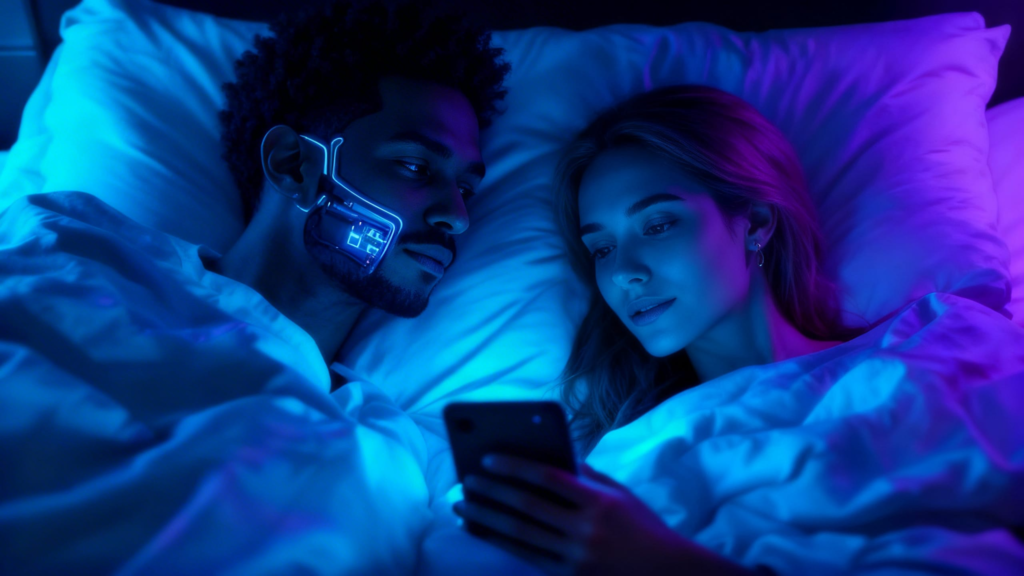
Two lovers lie beneath the same blanket, but their attention glows in different directions — one oriented toward the warmth of shared presence, the other toward the blue light of a screen. Nothing is wrong, nothing is said, yet something unmistakable shifts. In modern relationships, digital attention quietly reorganizes intimacy long before conflict appears. The mind turns toward micro-novelty faster than it turns toward the person beside it.
Modern platforms operate on emotional algorithms — systems engineered to predict, stimulate, and hold human focus. Over time, these environments begin shaping attachment rhythms, reward expectations, and even how partners unconsciously evaluate relationship satisfaction. Psychologists studying digital-age intimacy describe this as perceptual displacement — a subtle rerouting of emotional bandwidth toward environments built for speed and stimulation. Social scientists add that even silent phones nearby reduce empathy and conversational depth, thinning the emotional field between partners without anyone noticing.
As neuroplasticity adapts to repeated digital exposure, nervous systems recalibrate toward rapid reward cycles rather than slow co-regulation. Desire shifts in pacing. Emotional cues soften. Partners drift into logistical exchanges while secure bonding signals — eye contact, breath synchrony, shared silence — grow quieter.
This article explores how screens reshape internal chemistry, why presence fades before behavior changes, and how couples can reclaim intimacy without rejecting the digital world entirely. Rebuilding connection begins with noticing what the glow is replacing — and choosing differently.
What It Really Means When Digital Systems Enter the Relationship
TL;DR
- Digital systems become a quiet “third presence,” reshaping perceptual bandwidth and emotional pacing.
- Devices influence how partners interpret tone, responsiveness, and attachment signals.
- Feed-driven habits create subtle distance long before open conflict emerges.
- Early signs include divided focus, shortened replies, and reduced co-regulation.
- When used collaboratively, screens can strengthen bonding instead of fragmenting it.
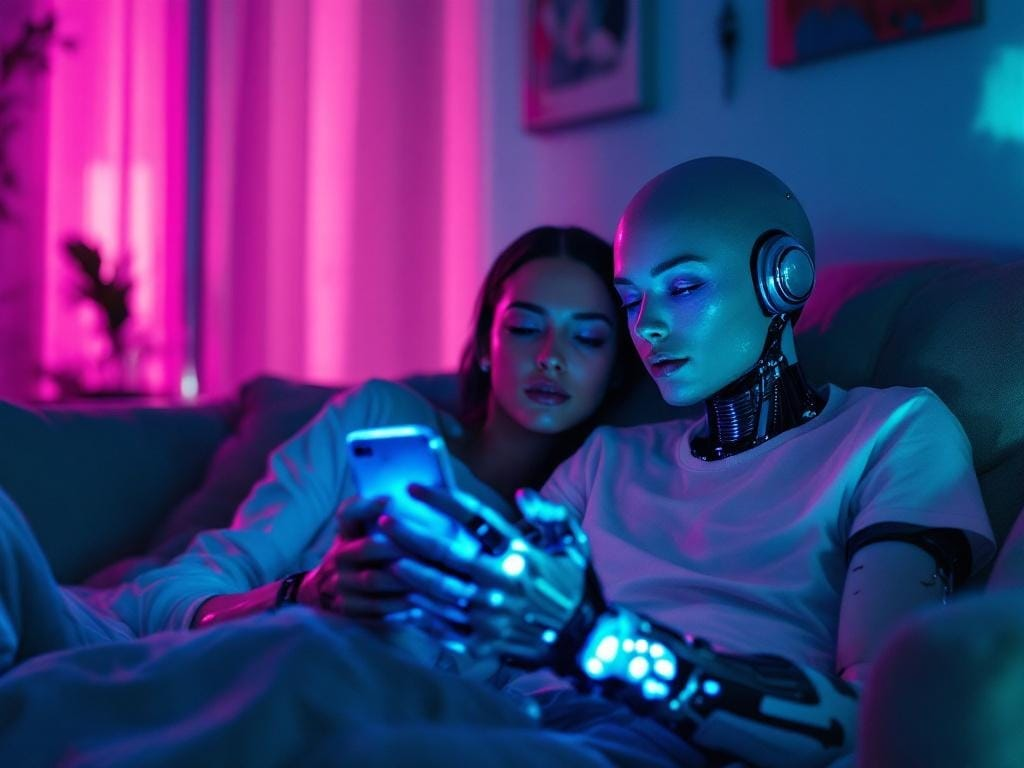
Digital systems rarely enter a relationship with drama — they enter through micro-moments. A glance at a notification during a kiss. A scroll during dinner. A reply that feels thinner than it used to. These tiny shifts accumulate, and over time, devices begin acting as a quiet third presence inside the relational field. Psychologists studying digital intrusions into intimacy note that even small interruptions alter how partners read emotional cues and attachment signals.
The first shift is attentional. Someone is physically present but perceptually divided. Modern platforms deliver stimulation at a pace the human nervous system cannot organically replicate — constant updates, novelty bursts, rapid color contrast. Social scientists have found that even the silent presence of a smartphone on a table reduces empathy, emotional attunement, and conversational depth. The device becomes a gravitational object in the room, subtly redirecting focus.
This redistribution of attention affects co-regulation — the subtle syncing of breath, posture, and tone that supports secure bonding. Replies shorten. Eye contact lingers less. Couples shift from sensory presence into logistical exchange: schedules, tasks, updates. None of this signals emotional failure; it reflects reward-system conditioning shaped by high-frequency digital environments.
Yet screens do not automatically weaken connection. When partners use them collaboratively — sharing voice notes, building playlists, maintaining closeness across distance — digital tools can reinforce pair-bonding. Studies in Computers in Human Behavior show that intentional co-use strengthens relationship satisfaction, while reactive checking weakens it.
The threshold appears when devices mediate more emotional moments than partners do. That is when closeness begins to feel filtered rather than embodied — not because love faded, but because attention reorganized itself around faster reward cycles.
How Screens Quietly Rewire the Internal Chemistry of Attraction

TL;DR
- High-frequency digital environments condition the brain toward rapid stimulation and shortened reward cycles.
- Continuous novelty recalibrates the nervous system’s threshold for interest and desire.
- Feed-driven interaction strengthens dopamine-based reward circuitry while weakening sustained sensory attention.
- Variable reward patterns make algorithmic content feel more immediately gratifying than embodied presence.
- Over time, neuroplastic adaptation reshapes pacing, attraction intensity, and relational responsiveness.
Modern screen-based environments function like high-speed stimulus engines — fast, bright, and constantly updating. Each scroll delivers micro-novelty that activates dopamine pathways before conscious awareness registers the shift. Over time, this conditions the brain toward rapid reward cycles and shorter attention spans. Psychologists studying digital behavior note that repeated exposure to variable reward patterns reorganizes reward circuitry, prioritizing fast stimulation over slower emotional cues.
This is where attraction begins to recalibrate. Feed-based systems present curated faces, engineered aesthetics, and continuous surprise. The cycle — glance, reward, refresh — strengthens neural pathways associated with novelty seeking. Research on neuroplasticity confirms that the brain adapts not to what is most meaningful, but to what is most frequent. When rapid visual stimulation becomes dominant, slower embodied cues — breath shifts, tone warmth, sustained eye contact — may register as less intense.
The algorithmic gaze also amplifies comparison. Idealized imagery subtly raises internal benchmarks for stimulation and aesthetic impact. As exposure increases, the nervous system adjusts its baseline, recalibrating what feels exciting. Studies in social neuroscience show that high-frequency digital engagement strengthens quick-reward circuitry while weakening circuits associated with sustained, co-regulated presence.
None of this suggests that desire disappears. It suggests that attraction reorganizes around environmental input. When novelty-driven interfaces dominate perceptual bandwidth, subtle bonding cues can feel muted. But when individuals intentionally reduce high-intensity stimulus loops, neural sensitivity to slower forms of attraction gradually returns.
The chemistry never vanishes.
It adapts to the world it inhabits.
The Emotional Cost of Living in a State of Half-Presence

TL;DR
- Repeated screen-checking fragments perceptual bandwidth and weakens in-person bonding.
- Split-focus disrupts co-regulation, creating emotional drift before conflict surfaces.
- Feed-driven scanning increases cognitive load, reducing capacity for sustained presence.
- Comparison loops amplify internal noise, distorting attachment signals.
- Chronic distraction shifts the nervous system into partial availability rather than secure engagement.
There is a particular ache that forms when someone is physically beside you but perceptually elsewhere. In modern relationships, this rarely emerges from dramatic withdrawal — it develops through repeated micro-fractures in attention. Each glance toward a device subtly divides awareness. Psychologists studying attentional fragmentation note that even small interruptions consume cognitive resources, reducing emotional depth and relational attunement.
This is the landscape of half-presence. A partner remains nearby, yet their nervous system toggles between embodied connection and anticipated stimulation. Over time, this divided state becomes habitual. Social neuroscience research shows that even a silent phone within reach lowers empathy and reduces co-regulation between partners. Emotional rhythms flatten because attentional energy is dispersed.
Feed-based environments intensify the effect. Rapid updates, commentary streams, and curated imagery keep the brain in scanning mode rather than settling mode. Psychology Today notes that sustained exposure to high-frequency input increases cognitive load and decreases sensitivity to low-intensity emotional cues — breath shifts, micro-expressions, tone modulation. When scanning becomes default, secure bonding signals grow quieter.
Over time, this alters attachment dynamics. Secure engagement requires consistent presence, subtle responsiveness, and nervous system syncing. When attention fragments repeatedly, partners may feel overlooked without understanding why. The drift is rarely intentional — it is conditioned.
Half-presence does not indicate lack of love.
It signals a nervous system trained for rapid orientation rather than sustained connection.
Once noticed, this state becomes reversible. When partners intentionally reduce interruptions and restore co-regulated moments — shared eye contact, slow conversation, uninterrupted touch — attachment rhythms stabilize again.
Presence is not dramatic.
It is cumulative.
When Real Bodies Feel Less Stimulating Than Algorithmic worlds

TL;DR
- Continuous exposure to high-contrast algorithmic content raises the brain’s reward threshold for stimulation.
- Curated imagery and comparison loops recalibrate internal benchmarks for attraction intensity.
- Feed-heavy habits narrow sensory bandwidth, muting real-world emotional cues.
- Rapid visual reward trains the nervous system toward instant gratification over embodied pacing.
- Over time, baseline recalibration alters relationship satisfaction without reducing affection.
In environments saturated with hyper-edited visuals, rapid novelty bursts, and curated aesthetics, the nervous system adapts quickly. Algorithmic platforms deliver stimulation at a pace the physical world cannot match. Behavioral scientists note that high-frequency novelty strengthens dopamine-driven reward circuitry, conditioning the brain toward elevated stimulation thresholds.
This produces a subtle recalibration. When someone spends extended time in high-contrast visual environments, the internal reward baseline shifts. Psychology Today reports that repeated exposure to idealized imagery increases comparison cycles and alters perceived attraction intensity in real-world partners. The effect is not about dissatisfaction — it is about sensory contrast.
Algorithmic feeds are engineered for impact: precision lighting, amplified features, cinematic pacing. Real bodies communicate differently. Human attraction unfolds through micro-movements, warmth, breath synchronization, and slow responsiveness. These cues require nervous system settling rather than scanning. Research in social cognition confirms that high-frequency digital engagement reduces sensitivity to low-intensity relational signals.
Swipe-based dating interfaces intensify this recalibration. Rapid evaluation at scale trains the perceptual system to expect immediate clarity and high stimulation. Over time, ambiguity feels less tolerable. Subtle attraction feels less dramatic.
Yet this shift is reversible. When individuals step away from constant novelty loops, neural reward circuitry gradually recalibrates. Sensory bandwidth widens. Subtle cues regain impact. Pair-bonding signals — warmth, touch, eye contact — become neurologically salient again.
Bodies do not lose their appeal.
The reward threshold simply rises when algorithmic intensity becomes the dominant environment.
The Third Presence: How Devices Begin to Replace Sensory Connection

TL;DR
- Constant digital pull creates split-focus patterns that weaken sensory awareness.
- Devices act like quiet companions that compete with subtle in-person cues.
- Repeated micro-interruptions shift how the mind prioritizes emotional connection.
- Fast-feedback environments reshape behavior, making slow, embodied moments harder to register.
- Collaboration and conscious habits help couples counter the drift created by media-heavy routines.
Connected devices have become a constant third presence in many relationships — always near, always offering stimulation, always capable of redirecting attention. Researchers refer to this dynamic as technoference: the intrusion of media systems into relational space. Even brief interruptions weaken emotional flow and disrupt attunement.
The effect is cumulative. Each vibration, preview notification, or subtle screen glow triggers anticipatory reward circuitry. Social neuroscience shows that the expectation of digital input activates dopamine pathways before interaction even occurs. This anticipatory pull fragments perceptual bandwidth, redirecting focus toward potential updates rather than embodied presence.
Over time, attentional economics shift. The mind begins prioritizing environments with faster reward expectancy. Emotional cues — breath shifts, posture adjustments, pauses in speech — require slower processing. When reward loops dominate, subtle signals feel less urgent.
This reshapes attachment dynamics. Secure bonding depends on repeated moments of co-regulation: synchronized nervous systems, sustained eye contact, mutual responsiveness. When micro-interruptions become habitual, these bonding windows narrow. Partners move toward logistical coordination rather than sensory exchange.
Yet displacement is not destiny. When couples establish conscious boundaries — shared tech-free windows, face-down rituals, collaborative agreements — reward hierarchies rebalance. Neural expectancy shifts. Co-regulation re-strengthens.
Devices do not replace love.
They compete for attention — and attention determines which signals grow louder.
Feeling Overlooked: When the Glow Outshines Human Cues

TL;DR
- Heavy engagement with digital feeds can overshadow subtle in-person cues, muting connection.
- Repeated distraction shifts how the mind processes emotional signals from partners.
- Social media loops amplify comparison and distort internal reactions.
- Constant monitoring of updates can make someone feel invisible beside the glow.
- Digital stimulation quietly reshapes satisfaction in relationships even with strong affection.
There is a quiet loneliness that forms not when someone leaves, but when their attention repeatedly orients toward a glowing alternative. It is not abandonment — it is perceptual displacement. Behavioral research indicates that heavy screen engagement reduces sensitivity to subtle attachment cues, making embodied presence feel less neurologically prioritized.
This shift develops gradually. Feed-based platforms deliver rapid novelty and curated stimulation that activate reward circuitry more intensely than slower interpersonal cues. Psychology Today notes that repeated exposure to idealized imagery increases comparison cycles and alters how individuals evaluate attraction and satisfaction within their partnerships. The recalibration is subtle but cumulative.
Real humans communicate through nuance — micro-expressions, breath pacing, tone shifts, pauses that signal safety. These signals require sustained perceptual bandwidth. When scanning becomes habitual, relational perception narrows. Studies in social cognition show that repeated digital comparison reduces sensitivity to partner responsiveness and increases misinterpretation of neutral cues.
The glow intensifies the displacement. Anticipatory reward expectancy pulls awareness outward, making the partner’s presence feel quieter by contrast. Over time, this can alter perceived relationship satisfaction even when affection remains intact.
The emotional experience often translates into a simple internal question:
Why does it feel like I’m competing with something I can’t see?
Yet once named, the pattern becomes workable. When couples intentionally reduce comparison loops and interrupt reactive scanning, perceptual sensitivity widens. Attachment cues regain prominence. Co-regulation strengthens.
Feeling overlooked is rarely about worth.
It is about which signals the nervous system has been trained to prioritize.
Reclaiming Connection: How Two People Break the Algorithm Together

TL;DR
- Reconnection begins when two people disrupt passive digital habits and rebuild intentional awareness.
- Shared rituals help replace distraction loops with deeper interaction.
- Digital tools can strengthen long-distance closeness when used consciously.
- Joint experiences reawaken sensitivity to real-time cues.
- Small, consistent adjustments create lasting intimacy in a tech-shaped world.
Rebuilding closeness in a screen-saturated world does not require elimination — it requires authorship. When two partners consciously interrupt reactive scrolling and anticipatory checking, they begin reshaping neural conditioning in real time. Psychologists studying digital behavior note that intentional “attention resets” increase emotional attunement and relationship satisfaction within weeks.
The recalibration begins with small rituals. A shared walk without devices. Cooking with phones out of reach. Listening to the same song through one set of earbuds. These moments restore co-regulation — the subtle syncing of nervous systems that underpins secure attachment. Behavioral research shows that collaborative, embodied experiences increase oxytocin release and strengthen pair-bonding pathways.
For long-distance couples, the strategy shifts but the principle remains. Technology becomes a bridge rather than a replacement: intentional video calls, structured check-ins, voice notes sent with presence rather than reflex. Studies in Computers in Human Behavior confirm that structured communication patterns maintain emotional closeness more effectively than passive or reactive interaction.
What transforms the dynamic is collaboration. When two people name comparison loops, notice distraction cycles, and establish shared boundaries, the algorithm loses its isolating power. Instead of competing individually against media systems, they operate as a unit.
Neuroplasticity works both ways.
The same reward circuitry conditioned by novelty can recalibrate toward slower, embodied cues.
Connection rarely returns through dramatic gestures.
It returns through repeated signals that say:
I am here. Fully.
FAQ — Technology, Attention, and Intimacy
How do digital habits actually change the way two people connect?
Connected platforms train the brain to expect rapid updates and frequent novelty. Over time, this can shorten attention spans and weaken co-regulation — the subtle emotional syncing that supports secure bonding. Research shows that even brief device interruptions reduce empathy and conversational depth (American Psychological Association,When attention repeatedly shifts outward, relational cues can feel quieter by comparison.
What are the signs that media use is affecting closeness?
Common signs include feeling secondary during shared moments, shorter responses, reduced eye contact, or noticing stronger emotional reactions to feeds than to your partner. Studies suggest that even minor device interruptions lower perceived relationship satisfaction and increase misinterpretation during conversations. The shift is usually subtle — more thinning presence than an open conflict.
Can feed-based environments create comparison or jealousy cycles?
Yes. Curated imagery and algorithm-driven visibility can raise internal comparison standards. Attachment research shows that repeated exposure to idealized alternatives can increase insecurity and distort perception, even when affection remains stable. Novelty recalibrates expectation; everyday connection can feel muted by contrast.
Do digital habits affect long-distance relationships differently?
They can. Intentional digital rituals — scheduled calls, shared media, collaborative experiences — strengthen pair-bonding. In contrast, fragmented scrolling and reactive messaging reduce emotional attunement. Research on social connection shows that active engagement builds satisfaction more reliably than passive consumption.
Why do arguments about device use feel so intense?
Conflicts about devices often reflect attachment needs rather than control. When attention shifts away during meaningful moments, the nervous system may interpret it as a subtle rejection. Research shows that attentional disruptions lower empathy and increase perceived relational threa. The intensity usually comes from longing for presence — not hostility toward technology.
How can couples rebuild closeness in a media-shaped world?
Small agreements help: tech-free windows, shared rituals, collaborative boundaries, and direct conversations about how feeds affect mood. Behavioral research suggests that joint regulation and intentional presence restore emotional stability over time. Closeness rebuilds incrementally.
Can technology enhance intimacy instead of undermining it?
Yes — when used intentionally. Shared shows, thoughtful messages, and co-created digital memories can strengthen connection. The APA notes that mindful engagement supports emotional well-being and relationship satisfaction when partners remain mutually attuned.
Conclusion — When Attention Comes Home, Intimacy Returns

The drift rarely begins with a loss of love — it begins with a redistribution of attention. In modern relationships, algorithm-driven environments reshape perceptual bandwidth long before partners consciously notice the shift. A quiet notification. A subtle screen glow. A reflexive scroll between sentences. Over time, these micro-moments retrain reward circuitry to orient toward speed, novelty, and anticipatory stimulation.
Social neuroscience shows that high-frequency digital exposure reduces sensitivity to low-intensity relational cues — breath changes, eye contact, tone warmth, shared silence. These signals are not erased; they are overshadowed by environments engineered for constant engagement. The nervous system adapts to whichever rhythm it experiences most.
But adaptation is not permanent. Neuroplasticity allows recalibration. When partners intentionally slow their habits — placing devices aside, restoring co-regulated moments, interrupting comparison loops — attachment pathways strengthen again. Oxytocin-linked bonding cues regain prominence. Relationship satisfaction stabilizes. What once felt muted becomes perceptible again.
At Lafleur Media, we explore how emotional algorithms, attention economies, and digital systems intersect with human attachment. Our mission is not to condemn technology, but to illuminate how it shapes perception — so individuals and couples can reclaim authorship over their intimacy. In a world built to capture attention, conscious presence becomes a radical act of connection.
Intimacy does not disappear.
It waits for attention to come home.
Disclaimer:
This article is for educational and informational purposes only. It is not intended as medical, psychological, or therapeutic advice. If you are experiencing relationship distress, mental health concerns, or emotional difficulty related to technology use, consult a qualified licensed professional for personalized guidance.