
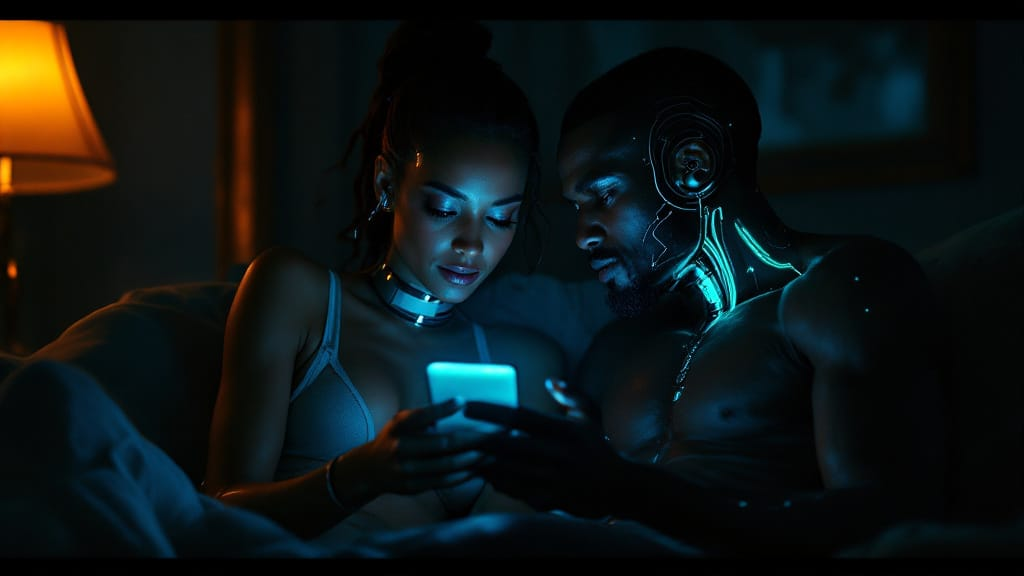
Technology Affecting Attraction: How Digital Attention Rewires Desire in Modern Relationships
How algorithmic novelty may be inflating your attraction threshold over time.
TL;DR
- Technology affecting attraction is subtle but cumulative.
- Constant digital novelty reshapes how the brain experiences desire.
- Social media and dating platforms increase exposure to curated, high-contrast stimulation.
- Repeated novelty can inflate attraction thresholds over time.
- Long-term partners may feel less intense due to recalibrated baselines, not incompatibility.
- Desire may fade not from failure — but from overstimulation in the digital age.
- Technology affecting attraction is subtle but cumulative.
The Impact of Technology on Relationships in the Digital Age
Technology affecting attraction is not dramatic — it is cumulative. In modern relationships, attraction no longer develops in isolation. It forms inside a digital environment saturated with social media, online dating, texting, and constant mobile stimulation. What feels like fading chemistry may reflect neurological recalibration rather than emotional failure.
Digital platforms deliver rapid, unpredictable novelty. Each swipe, scroll, or notification creates micro-anticipation. Over time, the brain adapts. What once felt stimulating in a romantic relationship may register as ordinary after sustained exposure to curated faces, filtered lives, and algorithmic contrast. This is one of the clearest ways technology affecting attraction operates beneath awareness.
This does not mean technology is destroying romance. Technology use can enhance connection when intentional. But excessive novelty reshapes thresholds. In a relationship in the digital age, your nervous system updates faster than long-term intimacy can.
Attraction is not only emotional. It is neurological. Understanding technology affecting attraction helps separate adaptation from incompatibility.
This article explores how digital attention patterns influence intimacy and desire — without reducing partners to blame or moral panic.
The Brain Adapts to Constant Digital Novelty
In the digital age, the brain is exposed to more novelty in a single day than previous generations encountered in weeks. Social media platforms, dating apps, and online environments are structured around variable stimulation. Each scroll, swipe, or notification introduces unpredictable contrast — and the nervous system responds accordingly.
Algorithms optimize attention, not intimacy. They deliver rapid shifts in faces, bodies, headlines, and emotional cues. This repeated exposure activates anticipation circuits. Over time, the baseline for what feels stimulating quietly shifts. Technology affecting attraction works through this slow recalibration process.
What once sparked attraction in a romantic relationship may feel muted — not because a partner changed, but because internal thresholds adjusted.
Researchers use the term “technoference” to describe how technology subtly interrupts relational presence. The interference is rarely dramatic. Instead, attention becomes fragmented. Focus shortens. Face-to-face interaction competes with constant digital stimulation.
When novelty becomes frequent and fast, slower relational rhythms can feel underwhelming. Intimacy unfolds gradually. The digital environment trains rapid contrast.
This is where technology affecting attraction becomes visible — in adaptation. Attraction recalibrates quietly. Modern relationships are not failing. They are competing with an environment engineered for continuous stimulation.
How Attraction Threshold Inflation Happens in Modern Relationships
As digital exposure increases, attraction does not disappear — it recalibrates. This is where threshold inflation begins.
In earlier environments, attraction formed within limited comparison. Today, curated images, filtered presentations, and endless profiles circulate through social media and online dating platforms daily. Repeated exposure increases subtle comparison bias, even without conscious intent.
When technology use becomes habitual, the nervous system adjusts its stimulation baseline. What once felt distinctive may feel average after sustained exposure to high-contrast novelty. Swipe-based environments compress attraction into rapid judgments, accelerating this recalibration.
The result is not automatic dissatisfaction. It is baseline inflation.
High-stimulation feeds reduce sensitivity to subtle emotional signals. Attraction may require a sharper contrast to register. Inside an otherwise healthy relationship, this can distort perception.
This does not mean technology is destroying connection. Digital tools offer benefits, including long-distance relationship support and social connectivity. But excessive novelty exposure gradually shifts internal thresholds.
Attraction inflation happens quietly. In the digital age, the nervous system often adapts faster than long-term intimacy evolves.
Why Long-Term Partners Feel “Less Intense” Over Time
In a long-term relationship, familiarity naturally lowers novelty response. A familiar face does not trigger the same anticipatory activation as a new profile or curated image. That difference can be misread as fading attraction.
But intensity and intimacy are not identical.
In modern relationships, digital contrast amplifies this effect. Repeated exposure to filtered images and idealized presentations subtly shifts perception. The brain compares automatically. Over time, a romantic partner may feel less stimulating — not because desire vanished, but because thresholds changed.
Online dating culture reinforces rapid evaluation. The mind learns to assess quickly. When that habit carries into a committed relationship, slower emotional cues can feel understated.
Technology interferes quietly. It fragments attention and reduces embodied presence. When scrolling replaces sustained face-to-face interaction, sensory depth declines.
This does not mean a relationship is failing. It means adaptation is occurring.
Threshold inflation is often misinterpreted as incompatibility. In reality, the impact of technology on relationships recalibrates attraction gradually, without announcing itself.
The Hidden Cost: Empathy, Depth, and Emotional Presence
The impact of technology on relationships extends beyond attraction thresholds. It also affects emotional presence.
Constant digital distraction narrows attention. When social media, texting, and mobile notifications fragment focus, sustained intimacy becomes harder to maintain. Face-to-face interaction requires slower processing — tone, pauses, body language. The digital world rewards speed instead.
“Technoference” describes how technology subtly interrupts romantic relationships by intruding on shared moments. Even brief interruptions can reduce perceived connection. Over time, this weakens emotional attunement — the quiet synchrony that strengthens bonds.
Online environments train rapid response and visual scanning. Human intimacy requires patience, vulnerability, and emotional effort.
Digital devices do not require reciprocity. Romantic partners do.
This is where dissatisfaction can quietly grow. Not through dramatic conflict, but through erosion of depth. When screen-based interaction replaces embodied presence, connection can feel thinner.
Technology as a tool can enhance long-distance relationships and modern romance. But without digital boundaries, attention fragments.
And attention is the foundation of attraction, closeness, and emotional health.
Recalibrating Your Attraction System in a Digital World
If attraction has shifted, the response is recalibration — not panic.
The impact of technology on relationships becomes reversible when attention changes. Reducing novelty saturation allows the nervous system to reset stimulation thresholds. This does not require abandoning digital tools. It requires intentional boundaries.
Begin with contrast reduction. Limit passive scrolling and swipe-based browsing. Create phone-free windows during shared time. Even small reductions in distraction improve perceived closeness and relationship satisfaction.
Restore slower rhythms. Face-to-face interaction rebuilds intimacy differently than texting. Sustained eye contact strengthens emotional attunement. Longer conversations rebuild presence.
If comparison loops persist — especially through curated feeds — couples counseling can help interrupt unrealistic expectations without blame.
Practical reset cluster:
- 7-day novelty reset (no swipe-based browsing, no passive scrolling)
- Nightly no-scroll rule during shared time
- One offline date focused on experience rather than performance
- Reintroduce embodied rituals that reinforce connection
Technology is not inherently harmful. It supports modern romance and long-distance relationships when used intentionally. But digital boundaries protect emotional well-being.
Attraction adapts to its environment. When stimulation slows, desire recalibrates.
Digital Attention, Attraction Thresholds, and the Impact of Technology on Relationships
Attraction adapts to its environment. In the digital age, the impact of technology on relationships is cumulative rather than dramatic. Social media, dating apps, and constant mobile stimulation quietly recalibrate perception.
When novelty becomes constant, thresholds rise. What once felt exciting in a romantic relationship may feel less intense — not because love faded, but because stimulation baselines shifted. This reflects neurological adaptation, not incompatibility.
The digital world rewards speed and comparison. Intimacy requires depth and sustained presence. When technology interferes through distraction or technoference, emotional closeness thins. Attraction can feel flatter even in otherwise healthy relationships.
Technology is not inherently harmful. As a tool, it can strengthen connection when used intentionally. But without boundaries, attention fragments — and attraction follows attention.
Recalibrating desire means restoring contrast: slowing stimulation, protecting face-to-face time, and rebuilding tolerance for subtle emotional signals.
At Lafleur Media, we examine how digital systems shape romantic relationships without blame or panic. Attraction does not vanish. It adapts.
If invisibility feels subtle but persistent, read Feeling Invisible: When Your Partner Makes You Feel Unseen in Your Relationship — a deeper exploration of how attention loss precedes desire loss.
Disclaimer
This content is for educational and informational purposes only and is not medical advice. For personal mental health concerns, consult a qualified healthcare professional.